

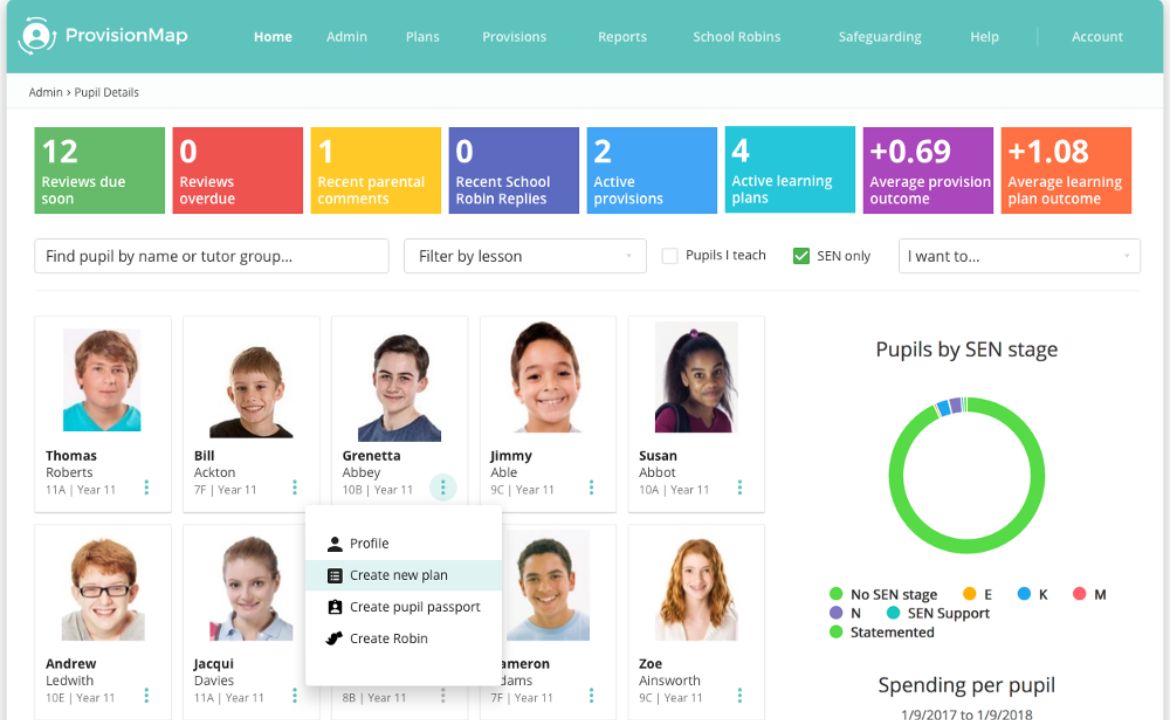
Supporting students with Special Educational Needs (SEN) requires careful planning, coordination, and clear documentation of interventions. A provision map has become an essential tool for schools seeking to organize and track their support strategies effectively. This comprehensive guide explores how provision maps work, their benefits, and best practices for implementation.
Understanding What a Provision Map Is
A provision map is a strategic document that provides a clear, visual overview of all the additional support and interventions available to students within a school. Unlike traditional SEN registers that simply list students and their needs, a provision map offers a dynamic framework that connects specific interventions to student groups, tracks progress, and demonstrates the effective use of resources.
At its core, this tool serves as a living document that maps out the educational landscape of support within a school. It typically includes information about the type of intervention, which students receive it, the duration and frequency of support, who delivers it, and the intended outcomes. This structured approach ensures that every child receiving additional support has their provision clearly documented and regularly reviewed.
The Key Components of an Effective Provision Map
Creating a successful provision map requires attention to several critical elements. First, the document should clearly identify different waves or tiers of intervention, typically following a graduated response model. Wave 1 represents quality first teaching for all students, Wave 2 includes targeted small group interventions, and Wave 3 encompasses specialist, individualized support.
Each entry on the map should specify the nature of the intervention, whether it addresses literacy, numeracy, social and emotional development, speech and language, or other areas of need. The map must also identify the target group or individual students, though this is often done by initials or codes to maintain confidentiality in shared documents.
Crucially, effective maps include entry and exit criteria, ensuring interventions are time-limited and purpose-driven rather than indefinite. Cost information, including staff time and resources, allows senior leaders to evaluate the return on investment and make informed decisions about resource allocation.
Why Schools Need a Provision Map
The benefits of implementing a provision map extend across multiple aspects of school management and student support. For SEN coordinators, it provides a bird’s-eye view of all interventions running simultaneously, preventing duplication and identifying gaps in provision. This oversight is particularly valuable in larger schools where multiple staff members deliver various interventions.
For teachers, the map offers clarity about which students receive additional support, what that support entails, and how it complements classroom teaching. This transparency enables better collaboration between class teachers and intervention staff, ensuring consistency in approach and messaging.
From a leadership perspective, provision maps demonstrate accountability and value for money. With schools facing increasing scrutiny over how they spend their SEN budgets, a well-maintained map provides clear evidence of strategic planning and resource deployment. It enables leaders to answer critical questions: Are we targeting the right students? Are our interventions effective? Where should we invest additional resources?
Parents and external agencies also benefit from this clear documentation. When discussing a child’s needs, schools can easily show what support has been tried, for how long, and with what results. This evidence base is invaluable during formal assessments or when requesting additional external support.
Implementing a Provision Map in Your School
Starting with a provision map requires an initial audit of all current interventions and additional support arrangements. This process often reveals surprising information—schools frequently discover more interventions running than they realized, or identify students receiving multiple overlapping supports.
Begin by gathering information from all staff who deliver interventions, including teaching assistants, learning mentors, and external specialists. Document each intervention systematically, ensuring you capture all essential details. Many schools use spreadsheet software or specialized SEN management systems to create their maps, choosing formats that allow for easy updates and analysis.
The format should be accessible and user-friendly. While comprehensive detail is important for the SEN coordinator and senior leaders, classroom teachers need a version they can quickly reference. Some schools maintain both a detailed master document and simplified versions for different audiences.
Regular review cycles are essential. A provision map should be updated at least termly, with progress data informing decisions about which interventions to continue, modify, or discontinue. This cyclical review process—plan, do, review—mirrors the graduated approach outlined in the SEN Code of Practice.
Measuring Impact and Making Data-Driven Decisions
The true value of a provision map emerges when schools use it to drive improvement. Each intervention should have measurable outcomes, whether through standardized assessments, curriculum-based measures, or observational data. By tracking these outcomes systematically, schools can calculate the impact of each intervention.
Cost-effectiveness analysis becomes possible when you combine outcome data with resource information. An intervention that costs significant staff time but produces minimal progress may need refinement or replacement. Conversely, low-cost interventions with strong outcomes might be expanded to support more students.
This evidence-based approach also supports staff development. When certain interventions consistently show impact, schools can identify what’s working and share that expertise. When outcomes are disappointing, it prompts reflection about implementation quality, student targeting, or the intervention’s suitability for particular needs.
Common Challenges and Solutions
Schools implementing provision maps often face initial resistance from staff who see it as additional bureaucracy. The key is emphasizing how the map reduces workload by streamlining communication and planning. When everyone can access intervention information easily, time-consuming questions and confusion decrease.
Maintaining accuracy is another challenge. The map only works if it reflects current reality, requiring designated responsibility and regular update schedules. Many schools make their SEN coordinator or an administrator responsible for monthly updates based on staff input.
Finally, schools must balance detail with usability. An overly complex map that nobody uses serves no purpose. Start simple and add layers of information gradually as the process becomes embedded in school practice.
Conclusion
A well-implemented provision map transforms how schools organize and deliver SEN support. It provides transparency, accountability, and a framework for continuous improvement. By clearly documenting interventions, tracking outcomes, and facilitating data-driven decisions, this essential tool ensures that every student receives the right support at the right time, delivered efficiently and effectively.















Leave a Reply