

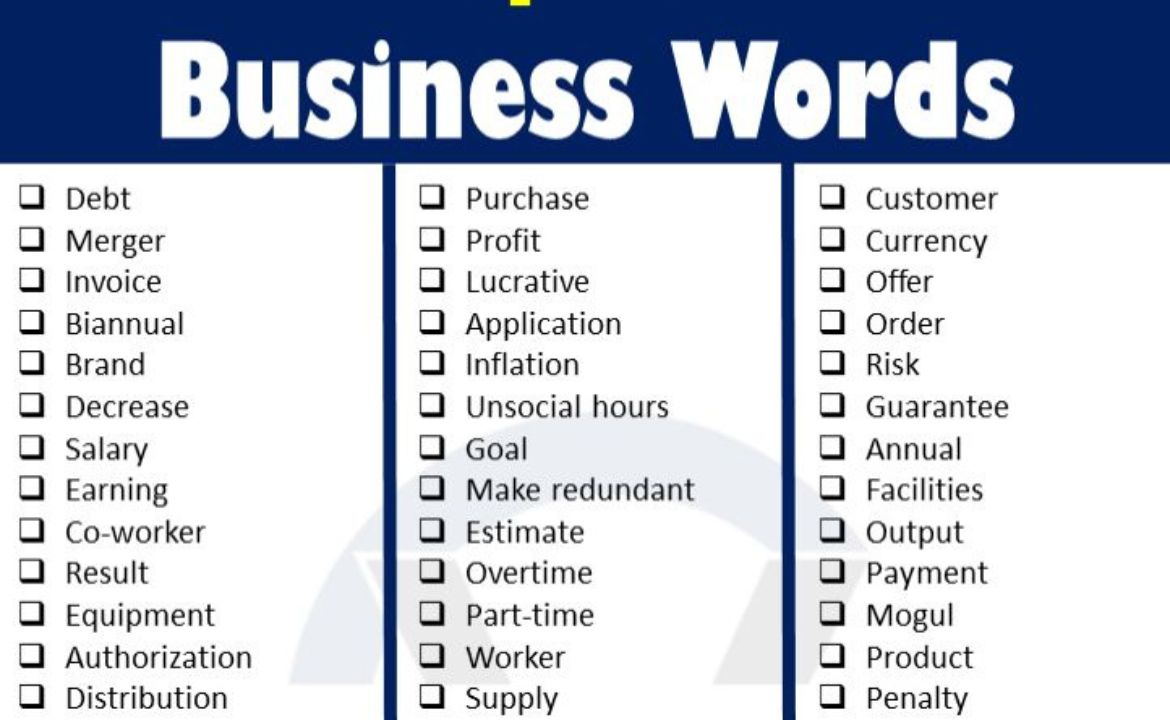
In today’s competitive corporate landscape, the ability to communicate with precision and authority can make the difference between being heard and being overlooked. Your professional vocabulary serves as a powerful tool that shapes how colleagues, clients, and executives perceive your competence and credibility. Mastering business words isn’t about using complex jargon to impress others—it’s about expressing your ideas clearly, persuasively, and professionally.
Why Business Vocabulary Matters
The language you use in professional settings directly influences your career trajectory. When you articulate ideas with clarity and sophistication, you command respect and demonstrate expertise. Strong communication skills consistently rank among the top attributes employers seek, and expanding your repertoire of business words positions you as a thoughtful, strategic professional who understands the nuances of corporate communication.
Strategic Words for Proposals and Planning
When presenting ideas or outlining strategies, certain words carry weight and convey forward-thinking leadership:
Leverage – This term suggests making the most of existing resources or opportunities. Instead of saying “use our strengths,” you might say “leverage our competitive advantages to penetrate new markets.”
Streamline – A powerful word that indicates improving efficiency by simplifying processes. For example, “We need to streamline our approval workflow to reduce turnaround time.”
Synergy – While sometimes overused, this word effectively describes the combined power of collaborative efforts that produce results greater than individual contributions.
Benchmark – This term demonstrates your commitment to measuring performance against industry standards or best practices, showing analytical rigor in your approach.
Scalable – Essential in discussions about growth, this word indicates that a solution can expand effectively without proportional increases in costs or complexity.
Words That Demonstrate Leadership and Initiative
Executives and managers are always looking for team members who think proactively and take ownership. These business words showcase your leadership mindset:
Spearhead – Rather than simply saying you “led” a project, saying you “spearheaded” an initiative conveys pioneering energy and decisive action.
Cultivate – This word suggests careful, strategic development over time. You might “cultivate relationships with key stakeholders” or “cultivate a culture of innovation.”
Empower – Leaders who empower others create environments where teams thrive. This word signals your commitment to developing others and distributing responsibility effectively.
Champion – When you champion an idea or initiative, you’re not just supporting it—you’re actively advocating for it with passion and commitment.
Drive – As a verb, this word conveys active leadership in achieving results: “drive revenue growth” or “drive organizational change.”
Financial and Performance-Related Terminology
In business discussions, especially those involving metrics and results, precise financial language establishes credibility:
ROI (Return on Investment) – Understanding and articulating ROI demonstrates business acumen and results-oriented thinking. Every major initiative should be evaluated through this lens.
Optimize – This suggests making something as effective or functional as possible, typically through systematic refinement and adjustment.
Margin – Whether discussing profit margins or margin for error, this term shows you understand the quantitative aspects of business operations.
Forecast – The ability to project future trends and outcomes based on data analysis is crucial for strategic planning.
Allocate – This word indicates thoughtful distribution of resources, whether discussing budgets, time, or personnel.
Words for Problem-Solving and Innovation
Professionals who can identify challenges and propose solutions are invaluable. These terms help frame your problem-solving capabilities:
Mitigate – Rather than simply “reducing” risk, mitigating risk sounds more strategic and measured.
Pivot – This word describes agile adaptation when circumstances change, showing flexibility and responsiveness to market conditions.
Innovative – While widely used, genuinely innovative approaches deserve this descriptor when introducing novel solutions to persistent problems.
Holistic – This term signals that you consider all aspects of a situation rather than viewing problems in isolation.
Sustainable – Beyond environmental contexts, this word describes approaches that can be maintained effectively over the long term.
Communication and Collaboration Terms
Modern business requires exceptional interpersonal skills. These business words emphasize your collaborative approach:
Facilitate – This suggests enabling progress and removing obstacles for others, demonstrating servant leadership qualities.
Align – Whether aligning stakeholders, strategies, or objectives, this word indicates your focus on cohesion and shared direction.
Transparent – In an era demanding accountability, transparency in communication builds trust and credibility.
Engage – Active engagement with team members, customers, or partners shows commitment beyond superficial interactions.
Consensus – Building consensus demonstrates diplomatic skill in navigating diverse opinions toward unified agreement.
Implementation and Execution Language
Ideas mean nothing without execution. These terms prove you can deliver:
Implement – More formal than “do” or “start,” this word suggests systematic rollout of plans or systems.
Execute – This conveys decisive action and follow-through on strategic plans with precision and commitment.
Operationalize – This sophisticated term describes the process of putting theoretical concepts into practical, working systems.
Deploy – Whether deploying resources, technology, or strategies, this word indicates strategic positioning and activation.
Monitor – Ongoing oversight and measurement of progress demonstrates accountability and continuous improvement mindset.
Putting Your Expanded Vocabulary to Work
Building your professional vocabulary is just the first step. The real value comes from using these words naturally and appropriately in context. Avoid forcing sophisticated terminology where simpler language would suffice—the goal is clarity enhanced by precision, not obscurity masked by complexity.
Practice incorporating these terms in emails, presentations, and meetings. Pay attention to how senior leaders in your organization communicate, noting which words they use to convey authority and expertise. Read business publications and industry reports to see how effective writers deploy these terms in context.
Remember that mastering business words is an ongoing journey rather than a destination. Language evolves, industries develop new terminology, and effective professionals continuously refine their communication skills. By consciously expanding your vocabulary and using it authentically, you’ll enhance your professional presence and open doors to greater career opportunities.
Your words are among your most powerful professional assets. Invest in them wisely, and they’ll return dividends throughout your career.















Leave a Reply