

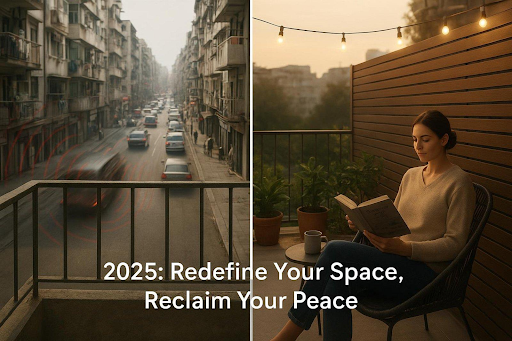
Living in a busy city often means swapping quiet for convenience. The steady buzz of traffic, sirens in the distance, and curious neighbors can turn your balcony into a stress point instead of a calm spot. So, can an acoustic balcony privacy screen really help with city noise and awkward views? Yes. These smart screens help you take back your outdoor area and make it a calm, private place where city noise fades into the background. By adding an effective balcony privacy screen, you can cut down common city problems and improve daily life without giving up your city home.
The strength of an acoustic balcony privacy screen is its two main jobs: it creates a visual barrier and also absorbs and deflects sound waves. You get visual privacy and less noise. Picture sitting with your morning coffee or winding down after a long day, feeling calm and shielded from the rush just beyond your railing. It creates a buffer zone where the city’s energy becomes a soft backdrop instead of an intrusive force, showing that city life can still be peaceful.
What Problems Do Urban Balconies Face?
Urban balconies offer a valuable link to the outdoors, but they also come with challenges. These spaces are often open to the less pleasant sides of city life, which makes it hard to relax and use them fully. Knowing the main issues is the first step to finding solutions that can turn these areas into true retreats.
From constant road noise to messy views of nearby buildings, city residents face many things that lower the value of their balconies. These are more than small annoyances; they can affect comfort, privacy, and well-being, leaving a useful outdoor spot underused.
Sources and Impact of Urban Noise Pollution
Noise is part of daily life in crowded areas. With more homes near roads and train lines, the problem grows. Common noise sources include:
- Traffic and engine hum
- Honking and sirens
- Construction activity
- Street chatter and nearby conversations
These sounds do not just fade away; they enter our spaces and make it hard to focus, relax, or talk in private on the balcony.
Long exposure to noise can raise stress, disrupt sleep, and lower quality of life. Even inside, outside noise can intrude, which makes a quiet outdoor corner even more valuable. Good noise control is not a luxury for city residents-it’s a real need.
Visual Eyesores in City Environments
Beyond sound, many balconies face visual intrusions. That could be staring neighbors, busy streets, utility poles, or unattractive details on nearby buildings. The concrete city can be lively, but the view is often far from calm.
These eyesores limit how much you enjoy a balcony. Instead of a place to relax, it becomes a reminder of the crowded parts of city life. A lack of visual privacy can make people feel watched and uneasy, stopping them from making the space their own.
Effects on Privacy, Comfort, and Wellbeing
Noise and visual intrusion together hurt privacy, comfort, and overall well-being. If every word feels overheard and every moment feels seen, personal space disappears. This can lead to unease and limit how you use the balcony, turning it into a functional pass-through, not a favorite spot.
Comfort drops too. It’s hard to relax with constant noise and bad views. This affects mood and creates a sense of disconnect at home. Any upgrade to a balcony should aim to counter these issues and build a calm, personal space.
How Does an Acoustic Balcony Privacy Screen Improve Urban Living?
An acoustic balcony privacy screen is more than a simple divider; it’s a smart way to improve city living. By tackling noise and visual intrusion head-on, these screens can turn a forgotten space into a useful part of your home, with clear benefits for daily life.
The key is how these screens manage the environment. They do more than block: they absorb and deflect sound while adding style. You get city energy and your own calm corner at the same time.
Reduces Noise from Traffic, Trains, and Neighbors
The first thing you’ll notice is lower noise. Regular privacy screens block sight only, but acoustic panels absorb sound waves to cut the daily noise of city life. That includes traffic hum, passing trains, and chatter from nearby balconies or the street.
Bruag’s acoustic systems, for example, are built to reduce noise from streets and railways, with panels that can cut noise by over 15%. This drop in decibels creates real calm in the middle of the city. These systems also work both ways, so your conversations stay private.
Blocks Unpleasant Views and Improves Looks
An acoustic balcony privacy screen also works as a stylish visual barrier. It can block busy roads, unattractive building parts, or constant movement outside. This helps you focus on your own space and creates a more pleasant setting.
These screens can look great too. You can choose from many materials, colors, and styles-from modern flat panels to natural wood or stone decor-to match your balcony. They can turn a plain railing into a focal point and add a clean, finished look to the whole area.
Increases Privacy Without Sacrificing Light
Many people worry that privacy screens will make the balcony feel dark or closed in. Many acoustic screens solve this by adding privacy while still letting in daylight. Some options let you see out while blocking views in from outside, so the space stays bright and open.
For example, custom-made screens can be built to your needs, balancing privacy with light. Materials like HDPE are breathable and filter light, and perforated designs let light pass through and create soft patterns. You get privacy and a light, airy feel at the same time.
Creates a Comfortable Outdoor Retreat
The goal of an acoustic balcony privacy screen is to build a comfortable outdoor spot that helps you relax. With less noise and fewer visual distractions, you get a calm setting where you can truly unwind. You can add plants, seating, and lighting to make it even better.
Think of your balcony made into a quiet space for reading, meditation, or fresh air, free from the city’s distractions. The screen sets the base layer of peace, and you finish it with greenery, cozy furniture, and soft light. Your balcony becomes a valued part of your home.
What Types of Acoustic Balcony Privacy Screens Are Available?
Today’s options go far beyond simple fabric covers. You can now choose advanced screens that work well and also look good. There are many choices to match your needs for sound control and privacy, and to fit your building’s style.
You can pick a natural look or a sleek modern one. With so many materials and designs, there’s a good match for almost any city balcony.
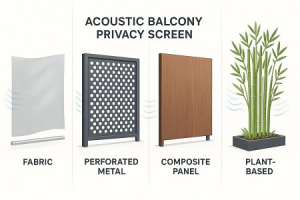
Material Options: Fabric, Metal, Composite, and Plant-Based
For materials, there are many choices. Fabric screens made from HDPE (high-density polyethylene) or polyester are popular because they’re light, simple to install, and handle weather well. HDPE is breathable and lets water pass through. Polyester is waterproof. Both come in many colors, offer UV protection, and help with wind, dust, rain, and sun year-round.
For sturdier options, composite panels like Bruag’s CELLON® and FORMBOARD TOP PINE® stand out. CELLON® is an HPL panel made of 70% cellulose webs and 30% phenolic resin. It is very resistant to weather and frost. FORMBOARD TOP PINE® is a dense wood-based panel that handles moisture and temperature changes well and uses sawdust, which is better for the environment. These panels work well for sound and also look refined, with wood or stone decor options. If you want a natural feel, plant-based choices-like dense plant lines, climbing plants on trellises, or tall bamboo-create living privacy and can soften noise while adding greenery.
| Material | Main benefits | Care |
| HDPE fabric | Breathable, UV protection, water-permeable | Wash with mild soap and water |
| Polyester fabric | Waterproof, light, easy to fit | Wipe or wash as needed |
| CELLON® (HPL) | Very weather-resistant, durable, stylish | Occasional wipe-down |
| FORMBOARD TOP PINE® | Moisture/temperature resistant, eco-friendly | Periodic cleaning; surface may get rougher over time |
| Plants (bamboo, vines) | Natural look, extra sound softening | Regular watering and trimming |
Design Trends: Perforated Panels, Solid Screens, and Custom Patterns
Design options are wide-ranging. Perforated panels are popular for sound control. Patterns with open areas of 40% or more can greatly improve sound absorption. Brands like Bruag let you choose shape, color, and pattern. Openings usually have a fleece on the back, and for best sound control, a sound absorber and a air gap sit behind the panel.
Solid screens focus on visual privacy but can also be built to reduce sound with thicker or layered materials. Custom patterns are growing in demand, letting you pick designs that match your taste. Bruag can even build from your own pattern. Whether you like geometric cut-outs, flowing shapes, or a clean solid look, you can match both style and sound goals.
How to Choose the Best Acoustic Balcony Privacy Screen
Picking the right screen is more than choosing a nice pattern. To get good results, look at features that affect performance, durability, and fit for your city setting. The right choice will look good and last, making your money well spent.
Take time to balance looks with practical needs. By focusing on the right points, you can turn your balcony into the quiet, private space you want.
Key Features to Consider: Sound Absorption, Durability, and Weather Resistance
Sound absorption is the main job here. Choose products made for acoustics. Panels with large open areas (for example, above 40%) can improve sound absorption, especially above 200 Hz. These panels often have a fleece backing and need an air gap behind them for best results. A thin timber fence won’t do much for sound, but acoustic-grade options can cut neighborhood noise by 4 to 5 times.
Durability and weather resistance matter a lot outdoors. Bruag’s CELLON® (an HPL panel) handles weather, frost, and moisture very well. FORMBOARD TOP PINE® also handles moisture and temperature changes and fits protected outdoor spots. Fabric screens in HDPE or waterproof polyester bring UV protection and handle the elements well. Think about sun, rain, wind, and temperature swings. A screen that wears out fast won’t look good or work well for long.
How to Measure and Fit for Your Balcony
Accurate measurement matters. Before you buy, carefully measure the length and height of your railing. Check again. If numbers differ, ask the supplier if the difference is okay (often within 2%). Many sellers offer custom sizes if standard ones don’t fit, including custom grommet spacing for an exact fit.
Match the fixing method to your railing type:
- Chain-link or metal railings: zip ties are common
- Glass railings: use perforated brackets
- Stone or carved wood: nylon cords or brackets
Make sure your railing has anchor points for your chosen fasteners. Pull the screen tight during install to avoid wrinkles and keep it stable. This helps both looks and sound performance.
Which Installation Methods Work Best for Different Balconies?
How you install the screen affects both how well it works and how long it lasts. Different balcony types and personal preferences call for different methods, from simple DIY to professional work. Knowing the options helps you place the screen securely and get the best from it.
Pick an approach that fits your railing, the screen material, and your comfort with tools. A well-fitted screen becomes a solid, seamless part of your outdoor area.
DIY Installation vs. Professional Help
Many acoustic screens are easy to install yourself. For fabric screens, start at one corner, thread a cable tie through a grommet, and secure it. Work along one side and keep pulling the screen tight to avoid wrinkles. Zip ties, rope, or metal wire all work for most railings, especially wrought iron. Because these installs avoid drilling and building changes, they often pass landlord and HOA rules.
For more complex systems-like custom perforated panels in CELLON® or FORMBOARD TOP PINE®-professional help may be the better choice. These builds can need a sound absorber and an air gap behind the panels for best results. Bruag, for example, makes panels to agreed drawings and ships them to the installer, while measurements and assembly happen on site by a pro team. This helps place and build the system the right way for strong noise reduction.
Safety and Maintenance Tips
Safety is very important. Make sure all fixings are tight and check them now and then, especially after strong winds or storms. If you DIY, follow the maker’s instructions and use proper safety gear. For bigger or heavier panels, think about the strength of your railing and ask a pro if unsure.
Upkeep is usually simple. Fabric screens often need a wash with mild soap and water. HPL composites handle weather very well and need only an occasional wipe. FORMBOARD TOP PINE® can get rougher with age, which is normal. Follow the maker’s care guide for your screen. Regular checks for wear and loose fasteners, plus quick fixes, will help it look good and work well for years.
Can You Combine Screens with Other Balcony Enhancements?
An acoustic screen is a great base for a private and comfortable balcony. You get even better results when you add a few smart extras. Layering elements creates a well-rounded setup that feels good to use every day.
The best city balconies mix several solutions so the combined effect really changes the space. Each part works with the others to block city stress and invite relaxation.
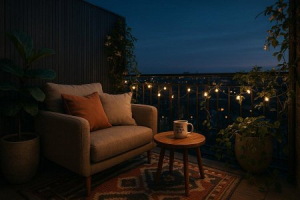
Pairing with Plants for Extra Privacy and Urban Resilience
Plants with your acoustic screen are a strong combo. Dense greenery looks good, freshens the air, and helps soften sound when used with an acoustic panel. Climbing plants on trellises can form living walls for extra privacy and a natural curtain effect, while also cutting some noise.
Choose tough, pollution-tolerant plants for city settings. Good picks include Boxwood, Dwarf Japanese Cedar, and fast-growing bamboo. Potted plants, vines, and hanging flowers soften the look of the screen and add a calm, green feel. This extra layer boosts privacy, improves the view, and helps create a nicer microclimate.
Adding Lighting and Furnishings for Comfort
Once you handle privacy and noise, add comfort with lighting and furniture. Space-saving pieces-folding café sets, stackable stools, or benches with storage-make small areas more useful. Pick weather-resistant materials. An outdoor rug defines the seating zone, while cushions and throws add color and softness.
Lighting plays an important role at night. Use layers: solar pendant lamps, LED string lights along railings, or portable lanterns for ambient light without hard wiring. Add task lighting for reading, like wall-mounted or solar table lamps. Accent lighting-plant uplights or LED strips-adds depth and marks edges. Together, these touches make the space warm and inviting.
Are Acoustic Balcony Privacy Screens Worth the Investment?
Buying an acoustic balcony privacy screen means weighing upfront cost against long-term gains. In crowded cities, quiet and privacy are rare, so the value goes well beyond the price tag. You’re investing in comfort, privacy, and day-to-day well-being.
City life brings steady noise and intrusive views. Reducing these has a lasting positive effect on how you feel at home. Here is why these screens make sense.
Long-Term Benefits for Quality of Life
The benefits add up over time. By cutting noise, these screens create a calmer setting, which can lower stress, improve sleep, and help you relax. Having a quiet, private outdoor corner in a busy city offers relief and control over your space.
More privacy also makes the balcony more usable. You’ll likely spend more time outside-eating, reading, or just getting fresh air-which can lift mood and well-being. The screen also blocks wind and strong sun, making the balcony more comfortable through the year. All of this turns the balcony into a valued part of the home.
Cost vs. Benefit Analysis
When you look at cost and benefit, don’t stop at the price. Costs vary by material, size, and custom work (weather-resistant acoustic panels might be $200-$500). Even so, the gains often outweigh the cost. Compared to moving or doing major renovations, a privacy screen is a budget-friendly way to get real improvement.
The value of peace and quiet is high: less stress, better mental health, and full use of your outdoor space. These are hard to measure but matter every day. A good-looking, useful screen can also lift the look of your home and may raise its value. Most systems need little care, which saves time and money compared to weaker options like simple curtains or frequently replacing plants. In the end, an acoustic screen supports a quieter, more private, and more enjoyable city life.
Answers to Common Questions About Acoustic Balcony Privacy Screens
It’s normal to have questions before you buy. From rules to real-world noise cuts, clear answers help you decide. Here are quick answers to common points.
Will a Privacy Screen Comply with Local Building or HOA Rules?
This is a common question for apartment residents. Many balcony screens are easy to install without drilling or building changes, so they often pass landlord and HOA rules. Since they don’t damage the structure, they work well for renters. Still, check your HOA agreement or ask your landlord first, as some rules can be strict about outside changes or looks. For permanent or built-in acoustic systems, also check local codes and get any needed approvals so you stay within the rules.
How Effective Are These Screens Against Urban Noise?
Acoustic screens can make a real difference. Unlike basic privacy covers, they use materials and designs that absorb and deflect sound. Panels with open areas of 40% or more can raise sound absorption, especially above 200 Hz. Some systems cut noise by over 15%, and acoustic fencing can reduce neighborhood noise by 4 to 5 times. They won’t erase all sound, but they turn harsh noise into a softer background. Results depend on the material, pattern, and proper setup-often with a sound absorber and an air gap behind the panels.
Are There Maintenance Requirements or Long-Term Care Tips?
Most acoustic balcony privacy screens need little care. HDPE or polyester fabric screens usually stay clean with mild soap and water. These materials often have UV and weather protection. Rigid panels like HPL or wood-based composites usually need a simple wipe-down. Wood-based panels may get rougher over time, which is normal. Follow the maker’s care guide for your product. Regular checks for wear, damage, or loose fasteners will help keep the screen secure and effective for years.












Leave a Reply