

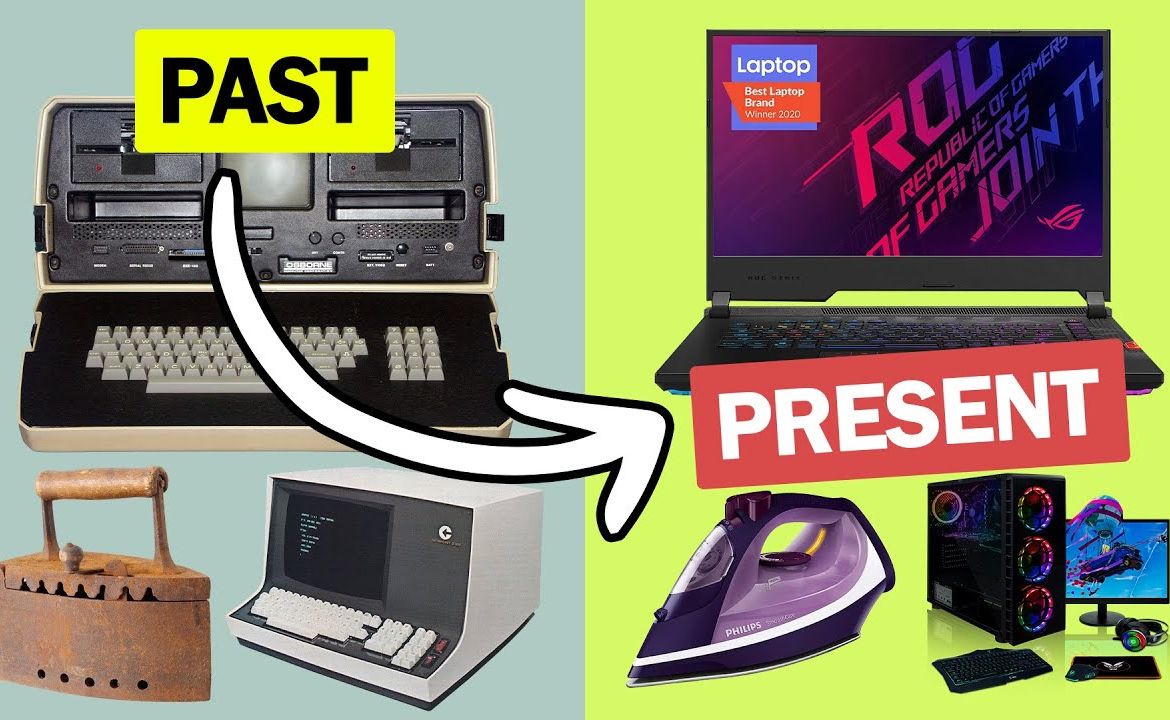
The evolution of computer technology stands as one of humanity’s most transformative achievements. From room-sized calculators to pocket-sized supercomputers, this journey has fundamentally reshaped every aspect of modern life. Understanding where we’ve been, where we stand, and where we’re heading provides crucial insight into the digital revolution that continues to unfold around us.
The Dawn of Digital Computing
The story of computer technology begins in the mid-20th century, when pioneers like Alan Turing and John von Neumann laid the theoretical groundwork for programmable machines. The first electronic computers, such as ENIAC (1945), were massive installations that required entire rooms and consumed enormous amounts of power. These early machines could perform calculations that would take humans weeks or months, but they were limited in capability and accessibility.
The 1950s and 1960s marked the era of mainframe computers, which businesses and government institutions used for large-scale data processing. These systems cost millions of dollars and required specialized operators. Programming was done using punch cards, and the concept of real-time interaction was virtually non-existent. Despite these limitations, mainframes revolutionized industries like banking, aerospace, and scientific research.
The invention of the transistor in 1947 and later the integrated circuit in 1958 set the stage for miniaturization. As components became smaller and more efficient, computers gradually became more powerful and less expensive. The 1970s introduced microprocessors, which would eventually make personal computing possible. This technological progression followed what became known as Moore’s Law, which predicted that the number of transistors on a chip would double approximately every two years, leading to exponential increases in computing power.
The Personal Computing Revolution
The late 1970s and 1980s witnessed a seismic shift as computer technology entered homes and small businesses. Companies like Apple, IBM, and Commodore introduced machines that individuals could actually purchase and operate without specialized training. The graphical user interface, popularized by Apple’s Macintosh in 1984, made computers intuitive and accessible to non-technical users.
This democratization of computing power sparked unprecedented innovation. Software development exploded, creating entirely new industries around productivity tools, entertainment, and business applications. Word processors replaced typewriters, spreadsheets transformed financial planning, and databases revolutionized information management. The personal computer became an essential tool for work, education, and creative expression.
The 1990s brought the internet into mainstream consciousness, connecting isolated computers into a global network. This connectivity transformed computers from standalone calculation devices into portals to infinite information and communication. Email replaced traditional correspondence, websites became the new storefronts, and digital communities emerged across cyberspace. The dot-com boom, despite its eventual bust, laid the infrastructure for the internet-centric world we inhabit today.
The Modern Computing Landscape
Today, computer technology permeates virtually every aspect of human existence. Smartphones—essentially powerful computers we carry in our pockets—have become extensions of ourselves. These devices possess computing power that would have been unimaginable to the engineers who built ENIAC, yet we use them casually for everything from navigation to entertainment to financial transactions.
Cloud computing has revolutionized how we store data and run applications. Rather than relying solely on local hardware, users now access vast computational resources distributed across global data centers. This shift has enabled new business models, from streaming services to software-as-a-service platforms, while making powerful computing tools accessible to startups and individuals who couldn’t afford traditional infrastructure.
Artificial intelligence and machine learning represent another frontier in modern computing. Algorithms now recognize faces, translate languages, drive cars, diagnose diseases, and even create art. These systems learn from massive datasets, identifying patterns and making predictions that augment or replace human decision-making in countless domains. Neural networks, inspired by biological brains, process information in ways that increasingly resemble human cognition.
The Internet of Things has embedded computing power into everyday objects. Smart homes adjust temperature and lighting automatically. Wearable devices monitor health metrics continuously. Industrial sensors optimize manufacturing processes. Agricultural systems manage irrigation precisely. This proliferation of connected devices generates torrents of data, creating both opportunities for optimization and challenges for privacy and security.
Looking Toward Tomorrow
The future of computer technology promises developments that will make today’s innovations seem quaint. Quantum computing, which harnesses the strange properties of subatomic particles, could solve problems that are currently intractable for classical computers. From drug discovery to climate modeling to cryptography, quantum machines may revolutionize fields that require processing vast solution spaces.
Neuromorphic computing aims to build chips that more closely mimic biological neural networks, potentially achieving greater efficiency and capability in AI applications. These brain-inspired architectures could enable machines that learn and adapt more naturally, using far less energy than current deep learning systems.
Augmented and virtual reality technologies will likely blur the boundaries between physical and digital worlds. As these systems mature, they may transform how we work, learn, socialize, and entertain ourselves. Imagine attending meetings as holograms, exploring historical sites through immersive reconstructions, or learning complex skills through virtual practice that feels physically real.
Edge computing—processing data closer to where it’s generated rather than in distant data centers—will become increasingly important as we deploy more autonomous systems and real-time applications. Self-driving vehicles, surgical robots, and industrial automation all require split-second decision-making that cannot tolerate network latency.
Biotechnology and computing will continue to converge, creating hybrid systems that interface directly with living organisms. Brain-computer interfaces may eventually allow direct neural control of devices, while DNA-based storage systems could archive humanity’s digital heritage in molecules that survive for millennia.
The Challenges Ahead
These exciting possibilities come with significant challenges. Cybersecurity threats grow more sophisticated as our dependence on digital systems deepens. Privacy concerns intensify as data collection becomes ubiquitous. Digital divides threaten to leave behind communities without access to advanced technology. Environmental impacts from energy-hungry data centers and electronic waste demand sustainable solutions.
Ethical questions about artificial intelligence, algorithmic bias, and the automation of human labor require thoughtful consideration. Society must grapple with how to harness technological progress while protecting human dignity, autonomy, and opportunity.
Conclusion
From vacuum tubes to quantum bits, computer technology has undergone breathtaking transformation in less than a century. Each generation has witnessed capabilities that seemed like science fiction become everyday reality. As we stand at the threshold of new breakthroughs in quantum computing, artificial intelligence, and human-computer integration, one certainty remains: computer technology will continue reshaping our world in ways we can scarcely imagine. The challenge for humanity lies not just in creating these powerful tools, but in wielding them wisely for the benefit of all.










Leave a Reply