

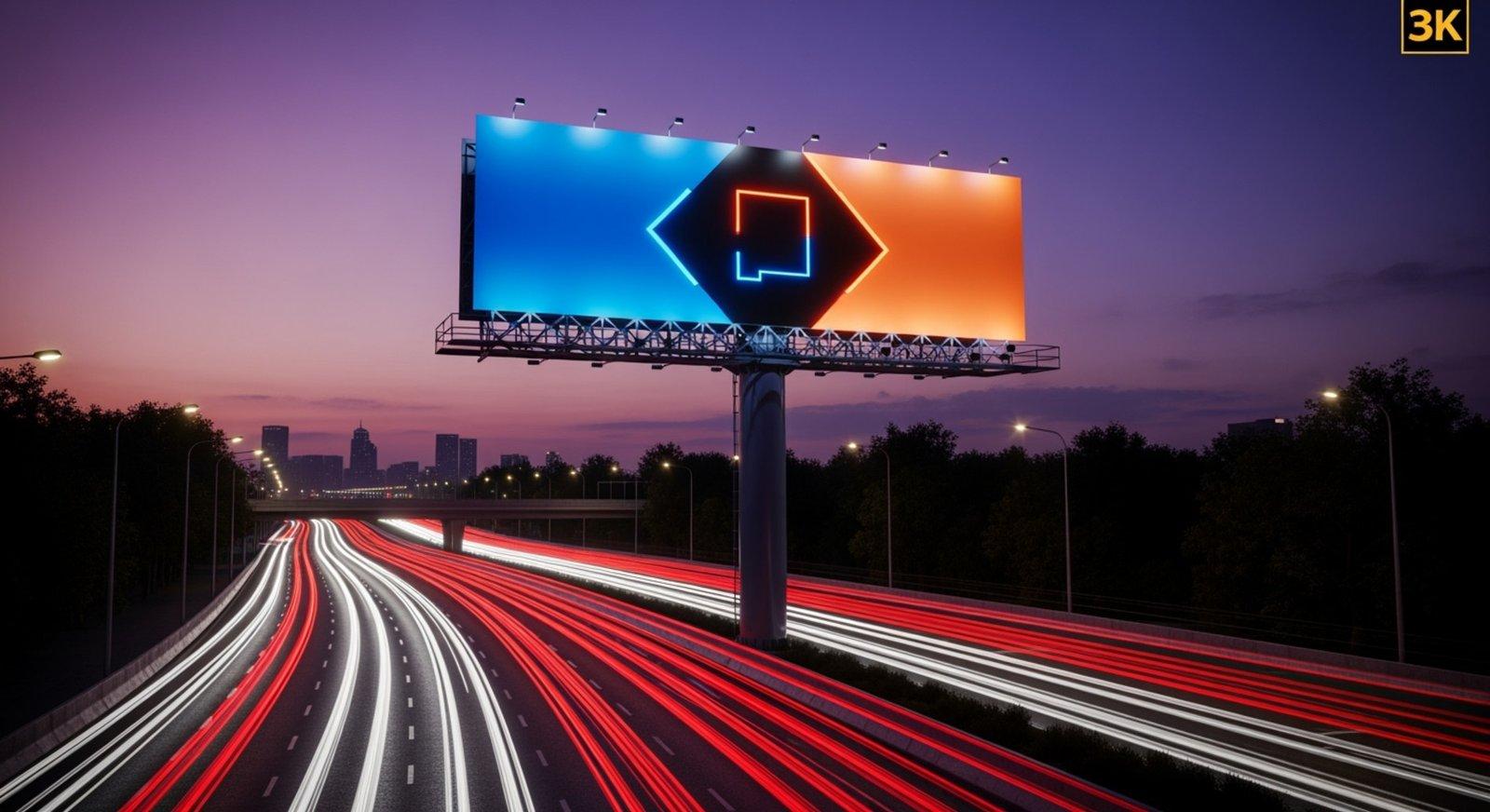
Creating a successful billboard advertising campaign depends on understanding both strong visuals and smart placement. The goal is to design messages that grab attention in a few seconds and stay in people’s minds as they pass by. Unlike online ads that can be ignored, a good billboard stands out and becomes part of the everyday environment.
This step-by-step guide will help you set up billboard ads that don’t just catch eyes but also bring clear results. If you want to learn more about billboard advertising and how to expand your campaign’s reach, check out additional outdoor media options.
Building a strong billboard campaign isn’t just about having an attractive design. It requires careful planning, knowing your audience, and using the benefits of this type of advertising. From the first idea to measuring how well your ad did, each step is important for turning a simple sign into a memorable message for your brand.
Here’s an outline to help your billboard ads stand out.
Why Billboard Advertising Works
Billboard advertising is still a reliable way to get noticed, even as new forms of media grow. Billboards give brands a constant, unavoidable place to show their message-something online advertising can’t always do. Think of how many drivers and walkers see the same billboards every day-this constant visibility makes a big impact.
Billboards also work well because they compete with fewer distractions than online ads. On the road, people are less likely to be pulled away by their phones or other screens, which means outdoor ads can have a bigger effect.
When people see the same billboard many times, they’re more likely to remember the brand.
Main Goals of Billboard Campaigns
- Build brand awareness: Billboards help more people recognize your business like a giant business card.
- Encourage action: Whether you want someone to check out a product, visit a store, or remember your brand for later, billboards can get them interested fast if the message is clear and simple.
Benefits Over Other Types of Ads
- High visibility: Billboards reach drivers, commuters, and locals alike, including people who don’t watch TV or spend much time online.
- Geographic targeting: You can choose locations where your target audience is often present.
- Creative possibilities: Billboards can use extra panels and 3D elements to create memorable visuals that stand out more than typical ads.
- Positive perception: Many people find outdoor ads more useful and less intrusive than digital ads.
Statistics on Billboard Effectiveness
| Stat | What It Shows |
| 70%+ | People intentionally look at billboard ads |
| 85% | Out-of-home ads (billboards, etc.) are seen as useful |
| 26% | People note a website or phone number from a billboard |
| ~80% | Workers commute regularly-potential daily viewers |
Types of Billboards
Billboards come in many styles-knowing the differences can help you choose what’s best for your campaign goals.
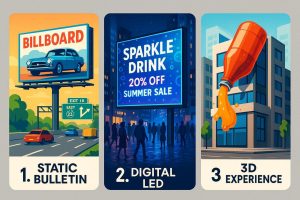
Traditional Static Billboards
- Bulletins: Large signs seen on highways or busy urban roads; offer maximum visibility.
- Posters: Slightly smaller, more flexible in location; good for targeting local street traffic.
- Wallscapes: Huge displays covering building walls; make a big impact in crowded city areas.
Digital and LED Billboards
- Screen displays allow for rotating ads, real-time updates, and animated content.
- Great for locations with slow-moving traffic, giving people time to view changing ads.
- Flexible for promoting special events, flash sales, and tailored content.
3D and Interactive Billboards
- Involve viewers with motion, touch sensors, or interactive elements.
- Use creative add-ons like 3D shapes or props that stick out from the billboard, attracting even more attention.
- Examples include billboards with moving or vibrating parts, or designs spilling outside the usual rectangular frame.
Mobile and Transit Billboards
- Placed on vehicles like buses, trucks, or vans to reach many places and people.
- Helpful for reaching young city crowds or spreading a message over large areas on a budget.
How to Choose the Right Billboard
Select the billboard type based on your campaign goals, audience, and size of your budget:
- Pick static billboards for stable, long-term messages in high-traffic areas.
- Pick digital if you want to update your message quickly or run different ads throughout the day.
- Go with 3D or interactive if you want your ad to be unforgettable or engage pedestrians.
- Use mobile billboards if you want exposure in different neighborhoods day to day.
Not sure which option fits your needs best? BE Media can help you navigate these choices based on your specific goals and budget. Our team has access to premium billboard locations across Poland—from traditional static displays to cutting-edge digital screens—and we’ll work with you to identify the format that delivers the strongest results for your campaign. Contact BE Media today for a consultation on the billboard strategy that’s right for your business.
How to Plan a Billboard Campaign
Good billboard campaigns start with clear planning. Decide what you want to achieve, who you want to reach, and don’t skip the early details.
Set Your Goals and Success Measures (KPIs)
- Clearly state what your ad should do: increase awareness, send customers to a store, promote a new service, etc.
- Set specific KPIs-like website hits, foot traffic, or brand recall surveys-to see if your ad works.
Know Your Audience
- Figure out who you want to see your billboard. Think about their age, habits, and travel routes.
- Make your message and design appeal to that target group.
Budget and Timeframe
- Add up the full cost: renting space, designing creative, printing, and installing (or managing digital updates).
- Decide how long your ad should run and allow time for every step-design to installation.
Pick Billboard Locations
- Look beyond simple traffic counts; choose spots where your target customers are likely to pass.
- Think about lighting for night visibility and make sure nothing blocks the view.
- Try to place ads where they introduce new people to your business.
Plan Your Timing
- Match your campaign with the right season or tie it to local events.
- Use digital billboards to change your message depending on the time of day or weather.
How Location Affects Billboard Performance
Where your billboard is placed matters just as much as what it says. Good placement puts your ad in front of the right people at the right time.
What to Think About When Placing a Billboard
- Don’t focus only on busy spots; make sure the people driving by fit your target group.
- Ensure good lighting and clear sightlines so people see the whole ad.
- Understand digital billboard cycles-how long your ad will show and how often it will rotate.
Using Data to Choose Locations
- Use local traffic and demographic data to find spots where your audience usually travels.
- Check how long cars or pedestrians are in view-longer stops mean you can use more details.
City vs. Rural Billboards
| Urban | Rural |
| More visual competition; focus on bold, simple ads near landmarks or busy areas. | Less clutter; billboards stand out more. Focus on brand awareness or giving directions. |
Legal and Permit Issues
- Check city or national rules on where and what kind of billboards you can put up.
- Get all needed permits before placing your ad.
- Work with companies experienced in local billboard rules to avoid legal problems.
How to Make Billboard Designs that Work
The look of your billboard is often your one chance to get noticed. Your design should be easy to read, bright, and communicate your message within seconds.
3-Second Rule
- Design your ad so drivers can take in the full message in three seconds or less.
- Avoid long sentences or crowded visuals-get to the point fast!
Font Choices
- Choose large, simple fonts (like Arial) instead of small or fancy ones.
- Keep enough space between letters and lines for better readability.
- For a 14’x48′ board, letters should be at least 24 inches tall to be readable from 500 feet.
Colors and Contrast
- Use bold, bright colors that don’t blend with the surroundings.
- High-contrast combos (e.g., white on blue) make messages easier to see and remember.
- Digital boards offer more color flexibility, but printed versions may fade over time, so pick strong colors.
Keep the Message Simple
- Stick to a seven-word headline or less.
- Don’t include extra details like “www.” or phone numbers unless absolutely needed.
- Use local references or simple calls-to-action that feel relevant to the community.
Images and Graphics
- Use one high-quality image or graphic. Avoid blurry, busy, or cluttered visuals.
- Vector art is best for scaling up without losing clarity.
- Try creative extensions or panels that reach outside the regular frame to increase visibility.
Consistent Branding
- Use the same colors, logos, and design style on all billboards and across other marketing channels.
- This helps people recognize your brand quickly, even in different settings.
Strong Call to Action (CTA)
- Make your CTA clear: what should viewers do next?
- Short, memorable domains or simple directions (“next exit” or “call today”) work best.
- The CTA should stand out but not crowd the overall design.
Design Mistakes to Avoid
- Too much text or too many visuals breaks the 3-second rule.
- Tricky fonts or low-contrast colors are hard to read from a distance.
- Unnecessary contact info (such as “www.” or long phone numbers) often goes ignored.
- Don’t be boring-original, memorable concepts get more attention.
How to Measure & Improve Billboard Results
Even though billboards aren’t clickable like digital ads, there are still ways to see if your ad works and make improvements over time.
Counting Views and Engagement
- Estimate how many people might see your ad based on road or pedestrian traffic.
- Watch for spikes in website hits, store visits, or mentions while your billboard is up.
- Set a starting baseline so any increases are easier to spot.
Measuring Return on Investment (ROI)
- Compare the cost of your campaign with any extra sales or leads it brings in.
- Use special URLs or store codes to track if billboard viewers take action.
- If you see more customers from areas near your billboard, that’s a good sign it’s working.
Using Unique Phone Numbers, QR Codes, and Custom Landing Pages
- Assign each billboard a unique phone number or QR code.
- Send people to a special landing page to track who responded specifically to your ad.
- This lets you count real results and fine-tune your messaging over time.
Testing Different Designs
- With digital billboards, run several versions and see which performs best (A/B testing).
- Even with static billboards, try out different designs in different spots and track which ones work better.
Make Adjustments as You Go
- Keep checking the results. If something isn’t working, try a new location or different ad design.
- Use what you learn to run better campaigns in the future.
Tips for Billboard Campaign Success
The best billboard campaigns use simple, creative strategies and avoid common mistakes. Here are some best practices to follow.
Mistakes to Watch Out For
- Choosing a location with high traffic but not your target audience.
- Putting too much info on the billboard-keep it quick and clear.
- Using hard-to-read fonts or weak color contrast.
- Missing or confusing calls to action.
- Inconsistent branding across different billboards and marketing channels.
Creative Ideas That Work
- Use a funny or clever concept-big ideas are easier to remember.
- Try creative visuals, such as images that extend beyond the main frame or even interactive features.
- Add localized messages or humor that speaks directly to the community.
Brand Consistency Across Channels
- Keep your billboard’s look and message in line with your digital, print, and in-store ads.
- Unified branding helps people recognize and trust your company wherever they see it.
- Use the billboard to generate curiosity and send people to your website or social media for more info.
New Trends in Billboard Advertising
Billboards are changing with the times by using new technology and creative strategies to stay effective. These updates are helping billboards to be more interactive, smarter, and better connected with other marketing platforms.
Digital and Automated Buying
- Buy digital billboard space in real-time (programmatic buying), like online ads.
- Change designs and messages quickly based on the time, weather, or events.
Interactive and Augmented Reality Billboards
- Let people interact with the billboard (by touch, gesture, or scanning it with their phone).
- Use AR so people can see extra digital content, like 3D images or special offers, through their devices.

Eco-Friendly Billboard Options
- Use recycled materials, biodegradable wraps, or “living” green walls.
- Make digital billboards more energy efficient or run them on renewable power.
Linking Billboards to Mobile and Social Media
- Add QR codes or hashtags to encourage sharing and interaction online.
- Share user-generated content from social media on digital billboards for extra engagement.
- Make the billboard the first step for customer connection, then guide them to online channels for more information or interaction.












Leave a Reply