

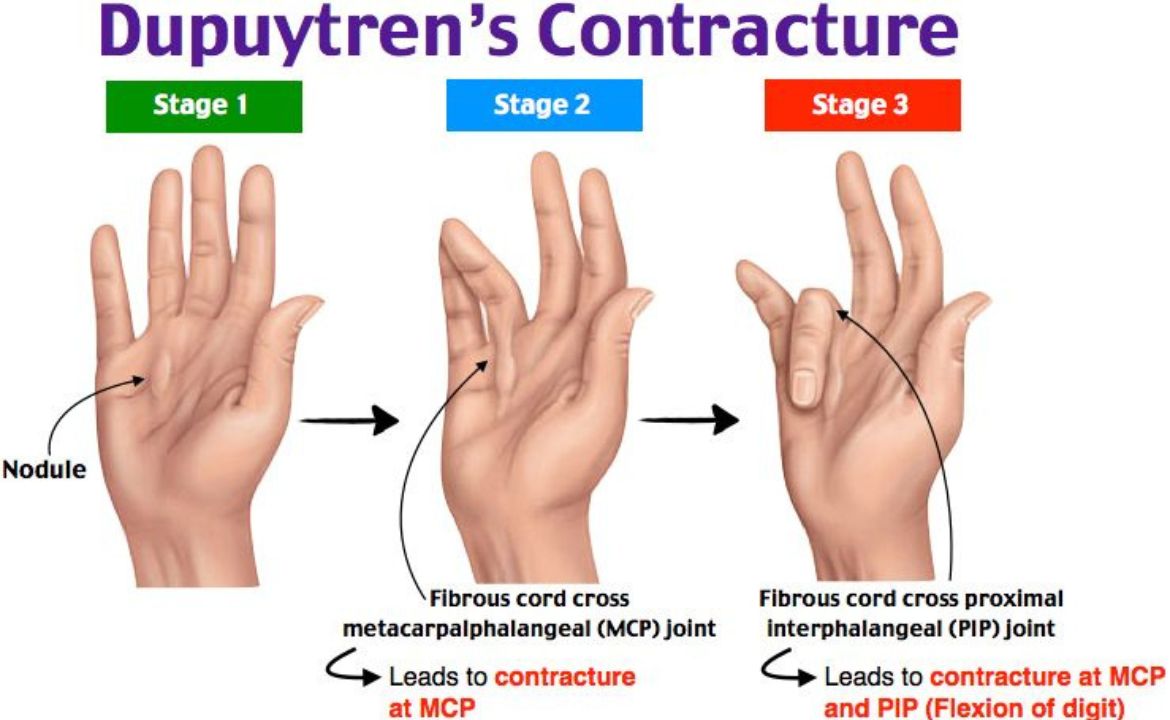
Dupuytren’s Contracture is a progressive hand condition that can significantly impact a person’s ability to perform daily tasks. It develops slowly over time and primarily affects the connective tissue beneath the skin of the palm. While the disease is not life-threatening, it can lead to serious functional issues if left untreated. In this guide, we will explore the problems associated with Dupuytren’s Contracture, its underlying causes, and the available treatment options to help patients manage and overcome its challenges.
Understanding Dupuytren’s Contracture
Dupuytren’s Contracture is a disorder where the fascia a layer of tissue beneath the skin thickens and tightens. This tightening causes one or more fingers, most commonly the ring and little fingers, to curl inward toward the palm. As the disease progresses, straightening the fingers becomes increasingly difficult.
Although painless in many cases, the condition restricts hand mobility, reducing the ability to grasp, hold, or manipulate objects. For some people, Dupuytren’s Contracture interferes with work, hobbies, and basic self-care activities such as shaking hands, washing, or putting on gloves.
Common Problems Associated with Dupuytren’s Contracture
The problems caused by Dupuytren’s Contracture vary depending on how advanced the condition becomes. In its early stages, people may notice small lumps or nodules in the palm. These may not cause discomfort but can feel unusual under the skin. As the disease develops, cords of tissue form and pull the fingers inward.
Some common issues include:
-
Loss of Finger Extension – The inability to fully straighten affected fingers makes it difficult to lay the hand flat on a surface.
-
Difficulty with Grip – Everyday activities such as holding a cup, typing, or turning a doorknob become challenging.
-
Impact on Independence – Severe contractures interfere with tasks like dressing, cooking, or driving, leading to reduced independence.
-
Psychological Distress – The visible deformity and functional limitations can cause embarrassment, frustration, and anxiety.
While not painful for most patients, the limitations in hand function make Dupuytren’s Contracture a serious quality-of-life issue.
Causes and Risk Factors
The exact cause of Dupuytren’s Contracture remains unclear, but it is believed to involve both genetic and environmental factors. The condition is more common in men over the age of 40, though women can also develop it.
Key risk factors include:
-
Genetics: Family history is one of the strongest predictors. If a parent or sibling has Dupuytren’s Contracture, the chances of developing it increase.
-
Age and Gender: Men over 50 are at higher risk compared to women and younger individuals.
-
Ancestry: The condition is more prevalent among people of Northern European descent.
-
Lifestyle Factors: Smoking and excessive alcohol use may contribute to the development or progression of the disease.
-
Medical Conditions: Diabetes, epilepsy, and liver disease have been linked to a higher likelihood of developing Dupuytren’s Contracture.
It is important to note that the condition is not caused by overuse of the hand, trauma, or injury, although these can sometimes worsen symptoms.
Diagnosis of Dupuytren’s Contracture
Diagnosis is typically made through a physical examination. A doctor will look for nodules, cords, and measure the extent of finger contracture. One simple test is the “tabletop test,” where patients are asked to place their hand flat on a table. Inability to do so often indicates Dupuytren’s Contracture.
In most cases, no imaging or blood tests are needed, as the condition is identifiable through visible and tactile signs.
Treatment Options for Dupuytren’s Contracture
Treatment depends on the severity of the condition and how much it interferes with hand function. For mild cases, observation may be sufficient, but as the contracture progresses, medical intervention becomes necessary.
1. Nonsurgical Treatments
-
Needle Aponeurotomy: A minimally invasive procedure where a needle is used to break the cords of tissue, allowing improved finger extension. Recovery is usually quick, but recurrence is possible.
-
Collagenase Injections: An enzyme injection that dissolves the toughened cords, followed by manipulation of the finger to restore movement. This option is less invasive than surgery.
2. Surgical Treatments
When contractures become severe, surgery may be the best option. Common surgical methods include:
-
Fasciotomy: The surgeon cuts the thickened cords to release the tension and straighten the fingers.
-
Fasciectomy: Removal of the affected tissue to prevent recurrence. This is a more extensive procedure but often provides longer-lasting results.
-
Dermofasciectomy: Both the diseased tissue and the overlying skin are removed, followed by a skin graft. This is generally recommended for recurrent cases.
3. Rehabilitation and Aftercare
Post-treatment rehabilitation is critical to maintain mobility and prevent stiffness. Physical therapy, splinting, and hand exercises help restore strength and function. Patients are advised to follow up regularly with their doctors to monitor for recurrence, as Dupuytren’s Contracture can return even after treatment.
Living with Dupuytren’s Contracture
Although Dupuytren’s Contracture can be challenging, many patients learn to adapt and manage their condition with lifestyle adjustments. Early diagnosis and treatment greatly improve outcomes, reducing the risk of permanent disability. Patients are encouraged to:
-
Perform regular stretching exercises as recommended by a therapist.
-
Avoid smoking and limit alcohol to reduce progression risk.
-
Use assistive tools, such as ergonomic grips, to make daily tasks easier.
Support groups and counseling may also help patients cope with the psychological impact of the condition.
Conclusion
Dupuytren’s Contracture is a complex condition that affects the hand’s functionality and, by extension, a person’s quality of life. While the exact cause is not fully understood, genetic and lifestyle factors play a major role. Problems associated with the disease range from minor inconveniences to severe limitations in daily activities. Fortunately, advancements in medical treatments — from nonsurgical options like enzyme injections to surgical interventions — offer hope for improved hand mobility and functionality.
If detected early, Dupuytren’s Contracture can be managed effectively, allowing patients to maintain independence and continue their daily lives with minimal disruption. Seeking professional medical advice at the first sign of symptoms is the best step toward successful treatment and recovery.















Leave a Reply