

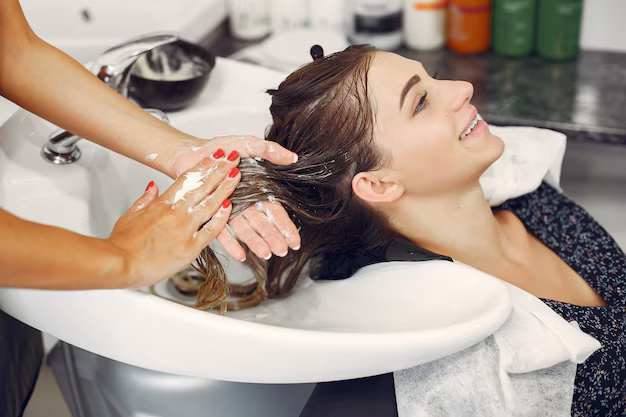
Have you ever stepped out of the shower feeling like your hair is weighed down, greasy at the roots, or just lacking that bounce and life you see in shampoo commercials? You’re not alone. Millions of people follow the same hair care routine they were taught years ago — shampoo, then conditioner — without ever questioning whether it’s actually the best method. But what if you’ve been doing it backwards this whole time? Enter reverse hair washing, a growing trend in the beauty world that’s quietly transforming the way people care for their hair.
What Is Reverse Hair Washing?
As the name suggests, reverse hair washing flips the traditional order of your shower routine. Instead of shampooing first and conditioning second, you apply the conditioner to your hair before the shampoo. It sounds counterintuitive, but the science behind it is surprisingly convincing — and the results speak for themselves.
The idea is simple: conditioner is applied to dry or damp hair first, left to sit for a few minutes, and then rinsed out. After that, you follow up with a gentle shampoo to cleanse the scalp and remove any residue. The shampoo lifts away the heaviness that conditioner can sometimes leave behind, while still allowing your strands to retain the moisture and nutrients they need.
Why Does Traditional Washing Fall Short?
To understand why reverse hair washing works, it helps to look at what traditional washing actually does to your hair. When you shampoo first, you strip the hair of its natural oils and open up the cuticle. Then, when you apply conditioner, it coats the hair shaft — which is great for softness and detangling. However, for people with fine or thin hair, that coating can feel heavy and limp. The conditioner essentially weighs the hair down, leaving roots looking flat and greasy by the end of the day.
For people with thick or coarse hair, traditional washing often leaves the ends feeling dry because the conditioner is rinsed away before it has a chance to fully absorb. Either way, the conventional method doesn’t always deliver the balance of clean, light, and moisturized hair that most people are chasing.
The Benefits of Reverse Hair Washing
1. More Volume at the Roots
This is perhaps the most celebrated benefit. Because the shampoo comes last, it cleanses away the heavy residue of the conditioner without stripping the hair entirely. The result? Roots that feel light, lifted, and genuinely voluminous — not just artificially puffed up with dry shampoo.
2. Better Moisture Retention
When conditioner is applied before shampooing, it has time to penetrate the hair shaft more deeply. The shampoo that follows doesn’t completely wash away the moisture — it simply removes the surface-level coating. This means your ends stay hydrated without feeling sticky or coated.
3. Smoother, Shinier Strands
Reverse hair washing can help seal the hair cuticle more effectively. Because the conditioner is absorbed before the shampoo disturbs the cuticle again, the hair lies flatter, reflects more light, and tends to look healthier overall.
4. Less Frizz
For those with wavy or curly hair, frizz is a constant battle. Applying conditioner before shampooing can help tame frizz by ensuring moisture is locked in rather than lost during the cleansing process. Many people with curly hair have reported significantly smoother results after switching to this method.
5. Scalp Health
Traditional washing followed by heavy conditioning near the roots can clog follicles and contribute to scalp buildup. With reverse hair washing, the shampoo step comes at the end and cleanly removes any conditioner that may have migrated to the scalp, helping to keep pores clear and the scalp balanced.
How to Try Reverse Hair Washing at Home
It’s easier than you think. Here’s a simple step-by-step guide:
Step 1 — Wet Your Hair Thoroughly Start by wetting your hair completely in the shower. Make sure every strand is saturated before moving on.
Step 2 — Apply Conditioner First Take your usual conditioner and apply it generously from mid-lengths to the ends of your hair. You can also work a small amount through the rest of your hair if needed. Leave it on for 3 to 5 minutes to allow absorption.
Step 3 — Rinse Out the Conditioner Rinse the conditioner out thoroughly with warm water. Your hair will feel soft and a little slippery at this stage — that’s completely normal.
Step 4 — Shampoo Your Hair Apply your shampoo, focusing primarily on the scalp and roots. Gently massage it in and let it work through the rest of your hair as you rinse. Use a sulfate-free or gentle shampoo for best results.
Step 5 — Rinse and Finish Rinse the shampoo out completely. You can finish with a cool water rinse to seal the cuticle further and boost shine.
Who Should Try Reverse Hair Washing?
Reverse hair washing is particularly beneficial for:
- People with fine or thin hair who struggle with flat, lifeless roots
- Those with oily scalps who find conditioner makes their hair greasy quickly
- Anyone with color-treated hair who wants to maintain moisture without buildup
- People with wavy or curly hair who want better frizz control
- Anyone whose hair feels perpetually weighed down after washing
It may not be the best fit for those with extremely dry or very coarse hair who need deep conditioning after cleansing — but even they can experiment with it and see if it makes a difference.
Final Thoughts
Hair care is not one-size-fits-all, but reverse hair washing has proven itself as more than just a passing trend. It’s a thoughtful, science-backed adjustment to your routine that can deliver real, noticeable results — more volume, better hydration, less frizz, and a healthier scalp. If your current routine isn’t giving you the hair you want, sometimes the solution isn’t a new product — it’s simply doing things in a different order.
Give it a try for two to three weeks and let your hair tell you the difference.










Leave a Reply