

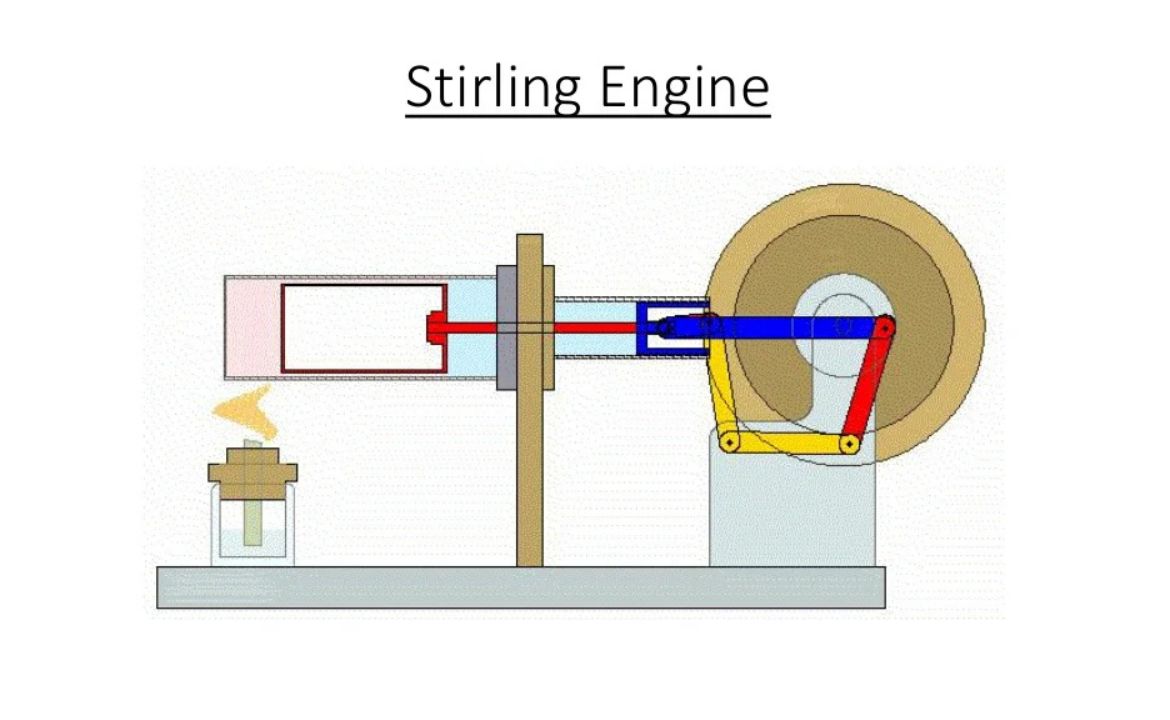
In an era where energy efficiency and sustainable technology dominate engineering conversations, one invention from nearly two centuries ago continues to captivate scientists and engineers alike. The Stirling engine, first patented by Scottish minister Robert Stirling in 1816, represents a remarkable feat of thermodynamic engineering that remains relevant and increasingly valuable in today’s quest for clean energy solutions.
What Makes the Stirling Engine Special?
Unlike conventional internal combustion engines that rely on explosive fuel combustion inside cylinders, the Stirling engine operates on an entirely different principle. It’s an external combustion engine, meaning the heat source remains outside the engine’s working cylinders. This fundamental difference opens up extraordinary possibilities for fuel flexibility and efficiency that traditional engines simply cannot match.
The beauty of this design lies in its simplicity and elegance. While modern car engines contain hundreds of precisely machined parts, a basic Stirling engine can function with just a few key components: two pistons, a cylinder, a heat source, a cold sink, and a working gas sealed inside the system. This minimalist approach not only reduces mechanical complexity but also eliminates many common failure points found in conventional engines.
The Working Principle: A Dance of Heat and Pressure
To understand how a Stirling engine works, imagine a sealed cylinder containing a fixed amount of gas—typically air, hydrogen, or helium. The engine operates on a closed regenerative thermodynamic cycle, moving this gas between hot and cold regions to create pressure differences that drive the pistons.
The cycle unfolds in four distinct phases. First, the gas is heated at constant volume, causing its pressure to rise dramatically. This pressurized hot gas then expands, pushing the power piston and performing useful work. Next, the gas moves to the cold side of the engine where it’s cooled at constant volume, reducing its pressure. Finally, the cold, low-pressure gas is compressed, requiring less work than was produced during expansion, and the cycle repeats.
The magic happens through a component called the regenerator—a porous material or matrix positioned between the hot and cold spaces. As gas flows from the hot side to the cold side, the regenerator absorbs heat from the gas. When the gas flows back, this stored heat is returned, dramatically improving the engine’s thermal efficiency. This heat recovery mechanism is what makes the Stirling engine theoretically capable of approaching the Carnot efficiency—the maximum possible efficiency allowed by the laws of thermodynamics.
Why Efficiency Matters: The Stirling Advantage
The Stirling engine can theoretically achieve efficiencies of 50% or higher under optimal conditions, compared to typical gasoline engines that struggle to exceed 30% efficiency. This remarkable performance stems from several factors working in harmony.
First, the external combustion design allows for continuous, controlled heat input rather than explosive bursts. This smooth energy transfer minimizes thermal losses and mechanical stress. Second, the regenerator’s ability to recycle heat internally means less energy is wasted to the environment. Third, because the working gas never escapes and undergoes no chemical changes, there’s no energy lost to exhaust gases or incomplete combustion.
The fuel flexibility of these engines is equally impressive. Since combustion occurs externally, a Stirling engine can run on virtually any heat source: natural gas, biomass, solar energy, geothermal heat, or even waste heat from industrial processes. This versatility makes them ideal for applications where conventional engines would struggle or fail entirely.
Real-World Applications: From Space to Submarines
Despite their advantages, Stirling engines haven’t replaced internal combustion engines in most applications. Their relatively low power-to-weight ratio and slower response to load changes make them less suitable for applications like automotive transport where rapid acceleration is crucial. However, they excel in specific niches where their unique characteristics shine.
NASA has explored Stirling engines for space missions, particularly for converting nuclear heat into electricity in deep-space probes where solar panels become ineffective. The engines’ reliability, longevity, and ability to operate in extreme environments make them perfect for these demanding applications.
Submarine manufacturers have also embraced this technology. Swedish submarines use Stirling engines for air-independent propulsion, allowing them to remain submerged for weeks without surfacing. The engines run almost silently, making these submarines extraordinarily difficult to detect—a crucial tactical advantage.
In the renewable energy sector, companies are developing Stirling-based systems that concentrate solar energy to heat the engine’s hot side, generating electricity without any fossil fuels. These solar-thermal systems can achieve impressive efficiencies while storing thermal energy for nighttime operation.
Combined heat and power (CHP) systems for homes and businesses increasingly incorporate Stirling technology. These units burn natural gas or biomass to generate electricity while capturing waste heat for space heating or water heating, achieving overall system efficiencies exceeding 80%.
The Future: Overcoming Challenges
The resurgence of interest in Stirling engines reflects growing recognition that we need diverse solutions for our energy challenges. Researchers are addressing traditional limitations through advanced materials, improved sealing technologies, and innovative designs that boost power density while maintaining high efficiency.
Modern manufacturing techniques, including 3D printing and precision machining, are making it economically feasible to produce complex Stirling engine components at scale. Computer modeling allows engineers to optimize every aspect of engine performance before building physical prototypes, accelerating development cycles.
The integration of Stirling engines with renewable heat sources presents particularly exciting opportunities. As the world transitions away from fossil fuels, technologies that can efficiently convert diverse heat sources into useful work become increasingly valuable. Whether capturing waste heat from data centers, converting concentrated solar energy, or utilizing geothermal resources, Stirling engines offer proven pathways to sustainable energy generation.
Conclusion
The Stirling engine stands as testament to the enduring value of fundamental scientific principles. Nearly 210 years after its invention, this elegant machine continues to offer solutions to modern problems. Its exceptional efficiency, fuel flexibility, quiet operation, and minimal maintenance requirements position it as an important technology for our sustainable energy future.
While it may never completely replace the internal combustion engine, the Stirling engine has carved out essential roles in applications where its unique advantages matter most. As we continue seeking cleaner, more efficient ways to generate and use energy, this remarkable invention from the Industrial Revolution era reminds us that sometimes the best solutions have been waiting patiently for us to fully appreciate their potential.












Leave a Reply