

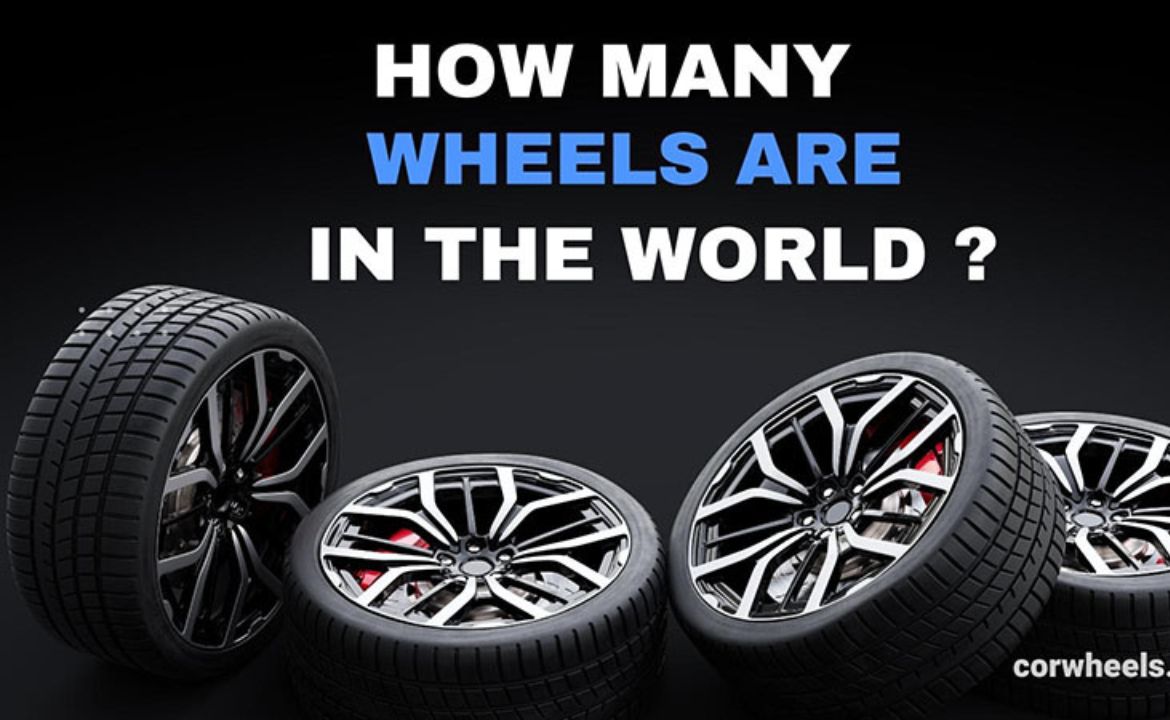
Have you ever stopped to consider just how many wheels surround us in our daily lives? From the obvious ones on cars and bicycles to the hidden ones inside machinery and toys, wheels are everywhere. The question “how many wheels are in the world” might seem simple at first, but the answer is surprisingly complex and absolutely fascinating.
The Great Wheel Debate
In 2022, a heated debate erupted on social media that captivated millions: are there more wheels or doors in the world? This seemingly innocent question sparked passionate arguments across the internet, with people forming teams and presenting evidence for their side. The discussion brought an interesting question to the forefront of public consciousness and made people realize just how ubiquitous wheels truly are in modern civilization.
While we may never arrive at an exact number, experts estimate that there are somewhere between 37 billion to over 50 billion wheels on Earth at any given moment. This staggering figure takes into account vehicles, machinery, toys, and countless other applications. However, the true number could be even higher when we consider every single wheel in existence.
Where Are All These Wheels?
Automobiles and Transportation
The most obvious contributors to the global wheel count are vehicles. With approximately 1.4 billion cars on the road worldwide, and each car having four wheels plus a spare, that’s roughly 7 billion wheels just from passenger vehicles alone. Add to that the millions of trucks, buses, motorcycles, bicycles, and other wheeled transportation methods, and the numbers start climbing rapidly.
Bicycles alone contribute massively to the wheel population. With an estimated 1 billion bicycles in the world, that’s 2 billion wheels right there. Countries like China and the Netherlands have particularly high bicycle ownership rates, with some Dutch cities having more bicycles than residents.
The Hidden Wheels in Your Home
When pondering how many wheels are in the world, most people don’t think about the wheels hiding in plain sight within their own homes. Office chairs typically have five wheels, rolling suitcases have two or four, shopping carts have four, and even your refrigerator might sit on small wheels to make moving easier.
Toys represent another enormous category. LEGO produces approximately 318 million tires annually, making them the world’s largest tire manufacturer by quantity. Hot Wheels, the popular toy car brand, has manufactured over 6 billion cars since 1968, with each car sporting four tiny wheels. When you consider all the toy cars, trains, trucks, and other wheeled playthings produced globally each year, the numbers become mind-boggling.
Industrial and Manufacturing Wheels
Factories and warehouses contain countless wheels that most people never see. Conveyor belts run on wheels, forklifts have multiple wheels, and industrial machinery contains wheels both large and small. Casters on equipment, dollies, carts, and pallets all contribute to the total. In a single large distribution center, there could easily be tens of thousands of wheels in operation at any given time.
Rolling office chairs are found in workplaces around the globe. With hundreds of millions of people working in offices worldwide, and each chair having an average of five wheels, this category alone adds billions to our global count.
The Wheel Production Industry
To better understand how many wheels are in the world, it’s helpful to look at production rates. The global tire industry produces approximately 2.5 billion tires annually just for vehicles. This doesn’t include toy wheels, industrial wheels, or specialty applications. Manufacturers in countries like China, Japan, Germany, and the United States churn out millions of wheels every single day to meet global demand.
The variety of wheels produced is equally impressive. They range from tiny wheels smaller than a fingernail used in watches and small electronics to massive wheels on mining trucks that stand taller than a person. Some wheels are designed to last decades, while others are meant for temporary use and quick disposal.
Unusual Wheel Facts
The wheel is considered one of humanity’s most important inventions, dating back approximately 5,500 years to ancient Mesopotamia. Interestingly, some advanced ancient civilizations, like the Incas and Aztecs, never developed the wheel for transportation, though they did use it in toys.
The largest wheel in the world is the Falkirk Wheel in Scotland, which isn’t actually a transportation wheel but a rotating boat lift. For traditional wheels, some mining trucks use wheels that are 4 meters (13 feet) in diameter and weigh over 5 tons each.
In space exploration, wheels have ventured beyond Earth. Mars rovers use specially designed wheels to traverse the Martian landscape, adding a few extra wheels to the cosmic count, though technically not “in the world” anymore!
Why the Number Keeps Growing
The answer to “how many wheels are in the world” changes every second. Manufacturing plants operate around the clock, producing new wheels continuously. Simultaneously, old wheels are being discarded, recycled, or repurposed. The global wheel population is in constant flux, growing overall as developing nations increase their vehicle ownership and manufacturing capabilities expand worldwide.
E-commerce has also contributed to the wheel boom. Millions of delivery vehicles, warehouse equipment, and shipping containers on wheels facilitate the movement of goods globally. The demand for mobility and efficiency in our modern world means that wheel production shows no signs of slowing down.
The Bottom Line
While we may never pin down the exact answer to how many wheels are in the world, we can confidently say there are tens of billions, possibly exceeding 50 billion. These wheels keep our world moving, from the vehicles on our streets to the toys in our homes and the machinery in our factories. The next time you go about your day, take a moment to notice just how many wheels you encounter. You might be surprised by how many you find in places you never expected. The wheel truly does make the world go round—billions of times over.















Leave a Reply